
Interview: Quick&Eat at We Love Green



Matthieu Lalanne is in charge of producing the entire food lineup for the We Love Green Festival. Mindful of the environmental impact of such an event, he strives to innovate with each edition to create an eco-friendly festival.
We accompanied him to three different festivals and gathered his thoughts on his experience with LocaCuisines in September 2022.
WLG = We Love Green
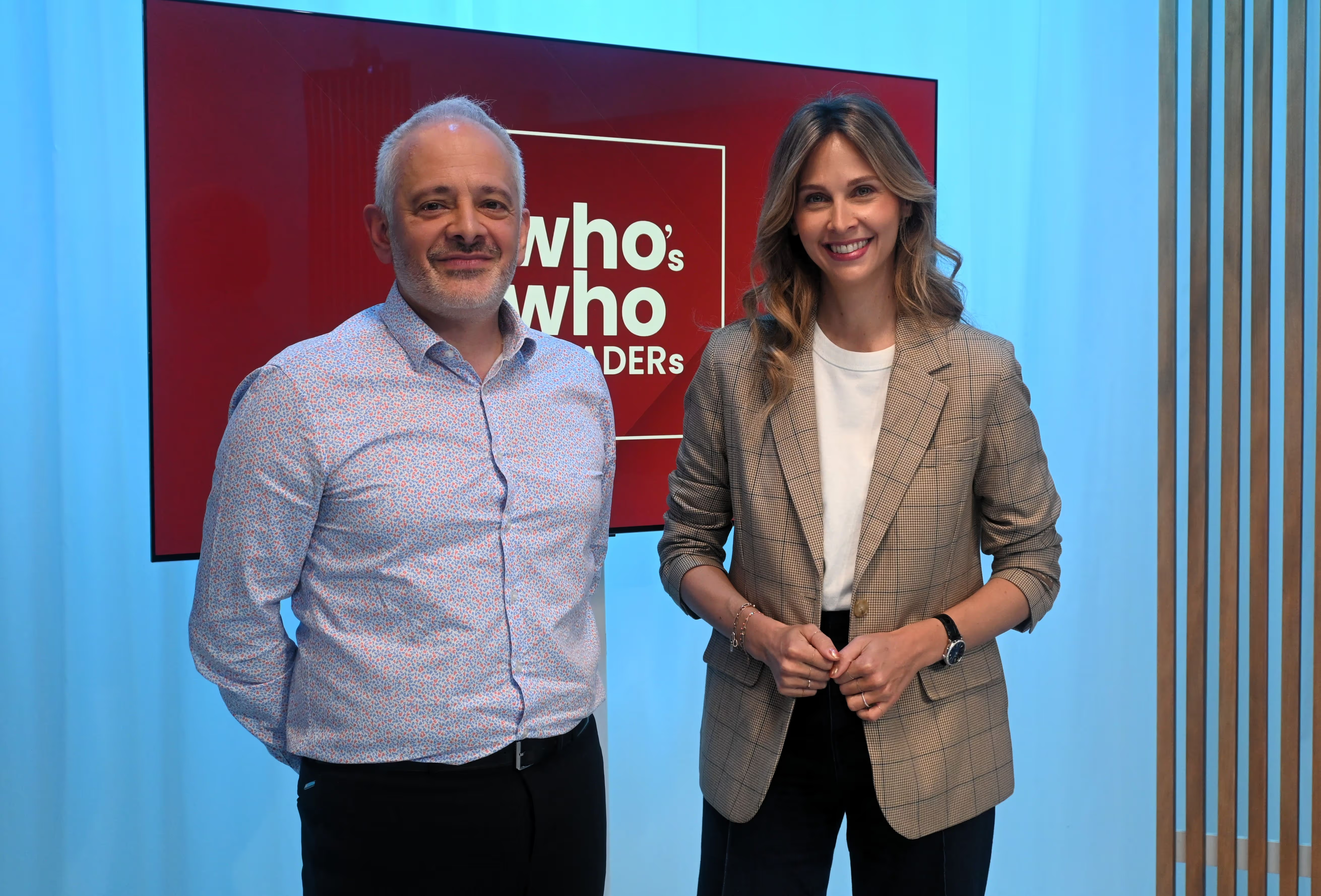
Matthieu Lalanne, Food Product Line Manager
Could you introduce yourself in a few words?
"My name is Matthieu Lalanne, and I'm in charge of production for the entire food lineup at the We Love Green Festival, working alongside Thomas Grunberg. He's been part of the team for 6 years, and I've been here for 3 years.
Our job is to issue a call for applications with a set of guidelines specifying the eco-responsibility standards that festival food vendors must meet. We receive all applications online. We receive just over a hundred applications. After that, we meet with Thomas and Justine, the project manager, to select our top picks. Finally, we organize a workshop to present the remaining applications to a jury of professionals: Michelin-starred chefs, journalists, food influencers, and others. Then, we contact the selected restaurateurs to invite them to participate in the festival.
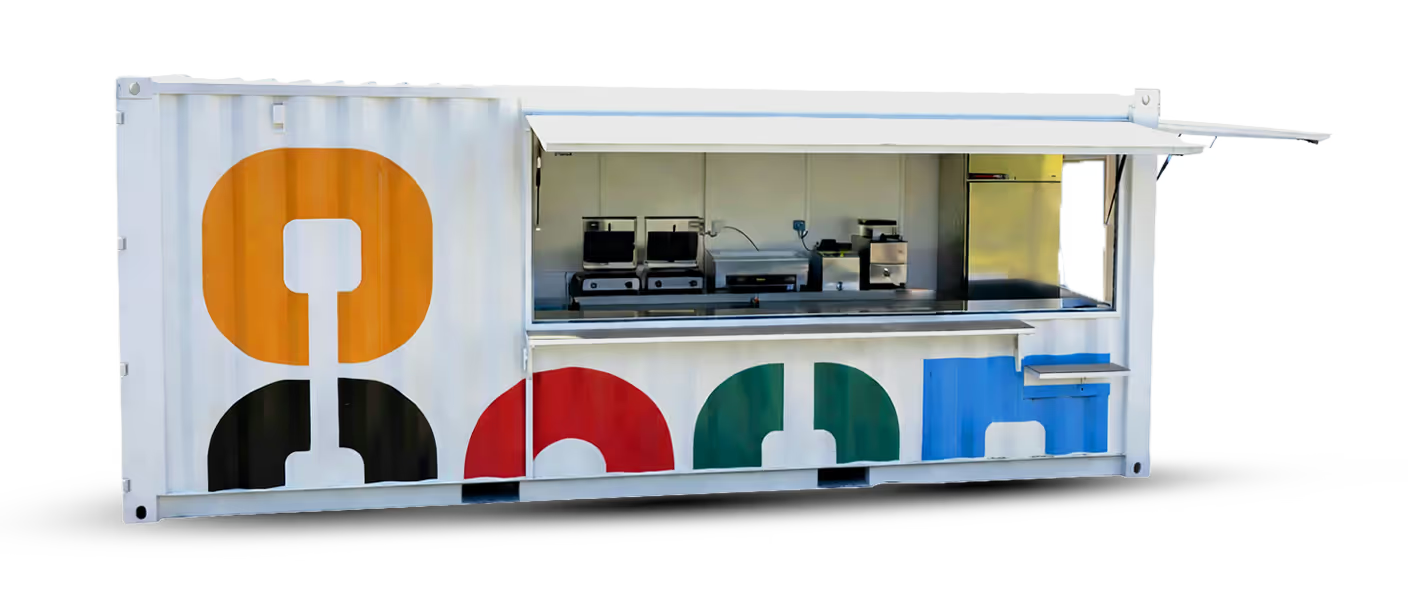
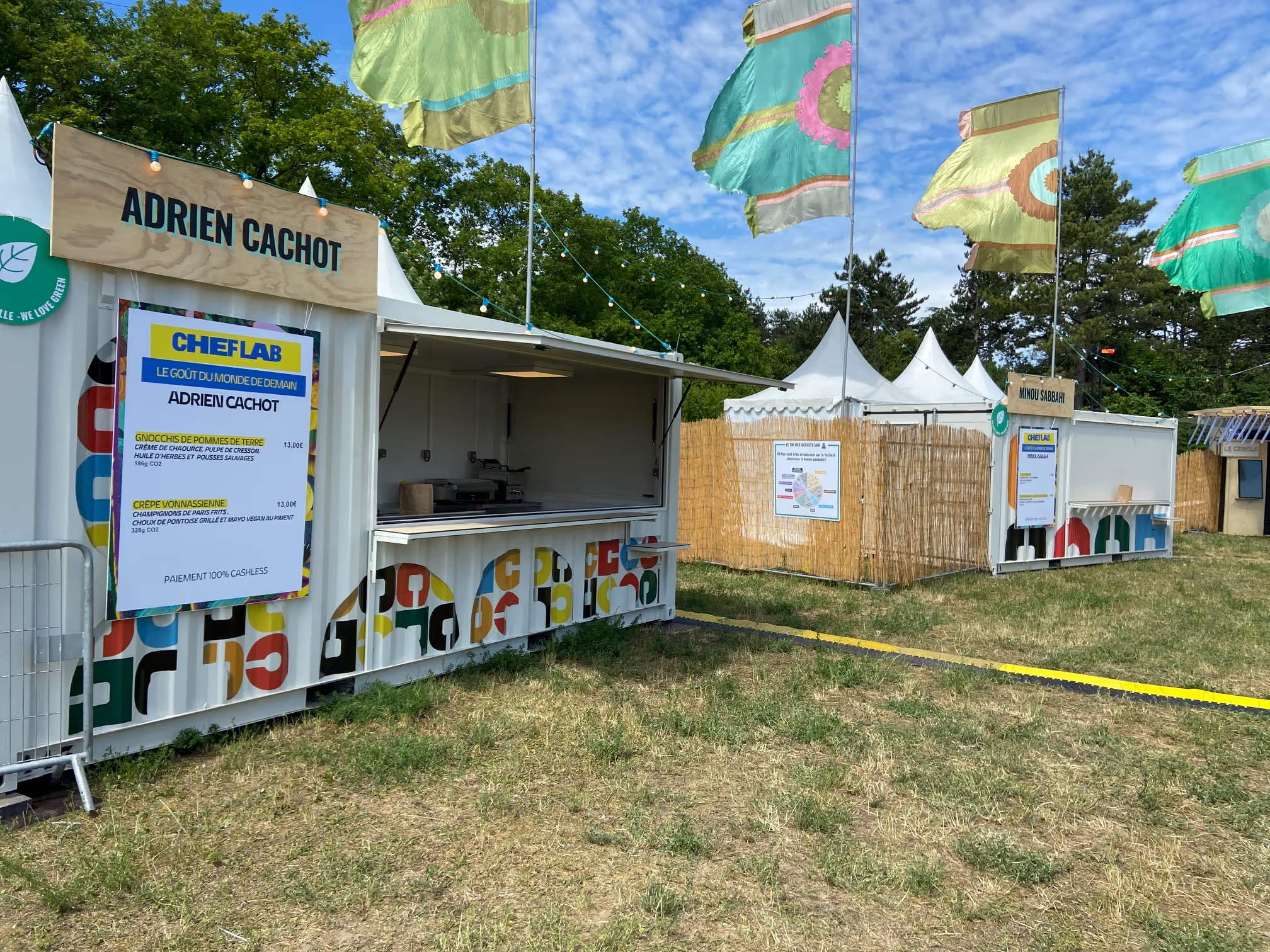
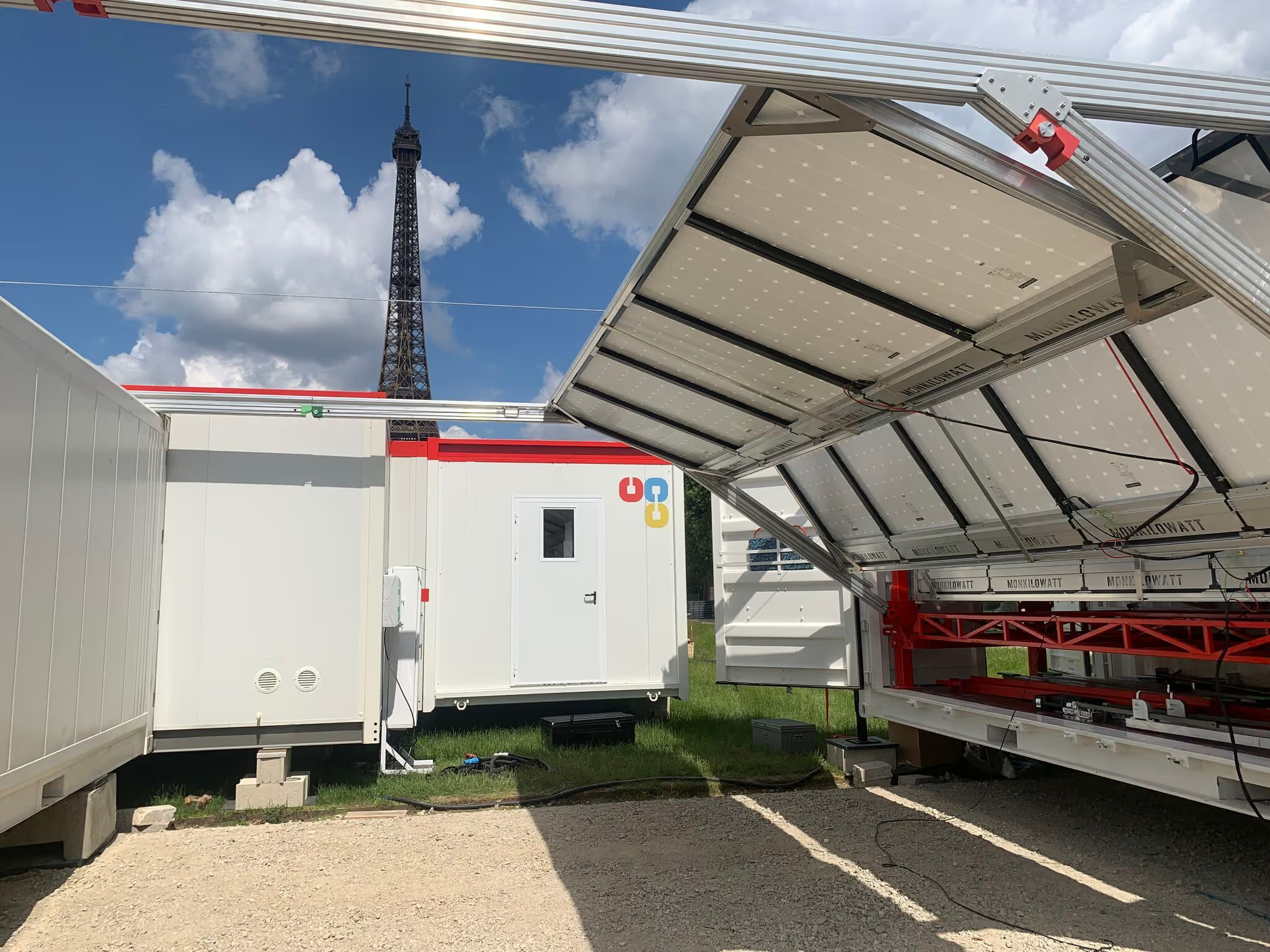
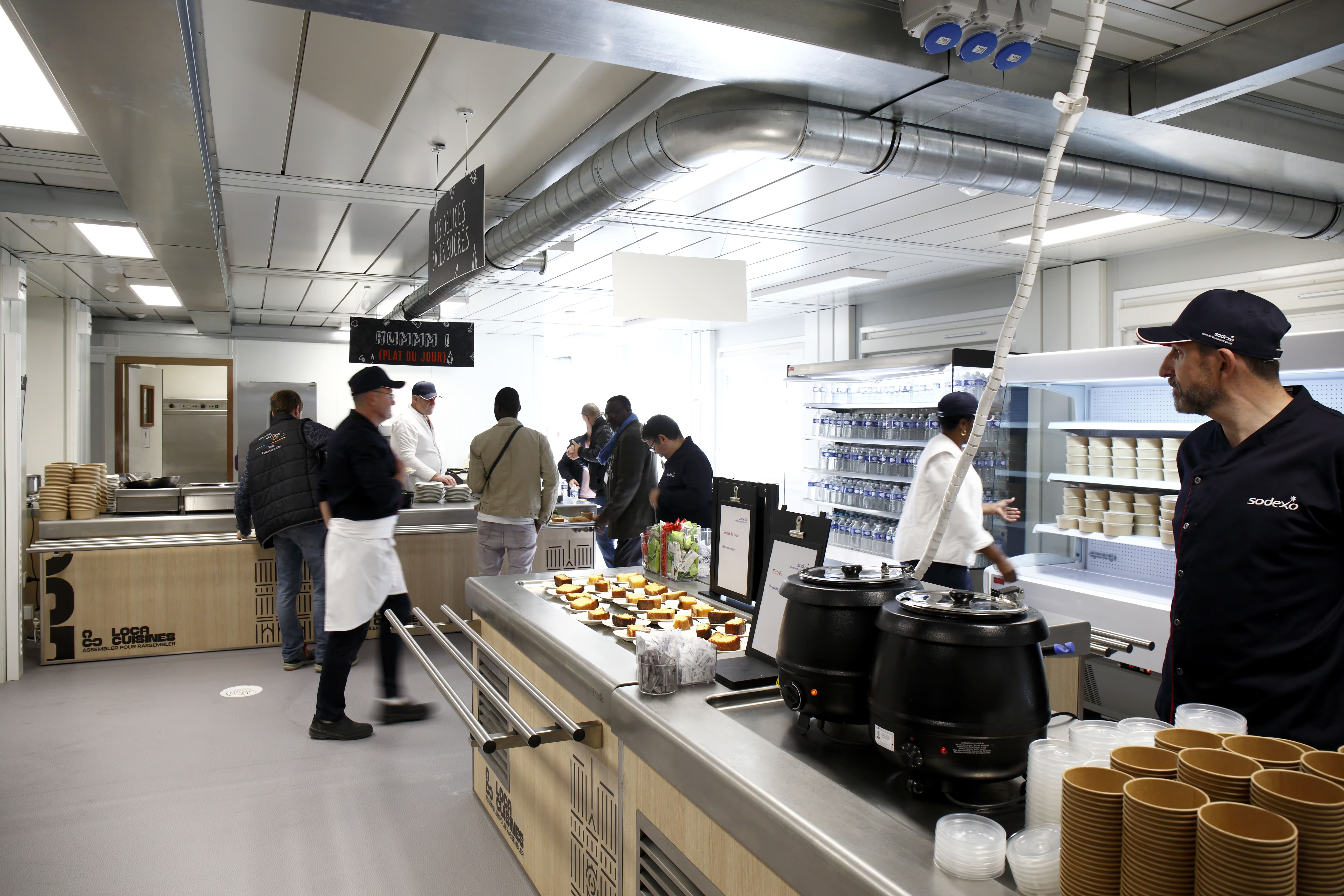
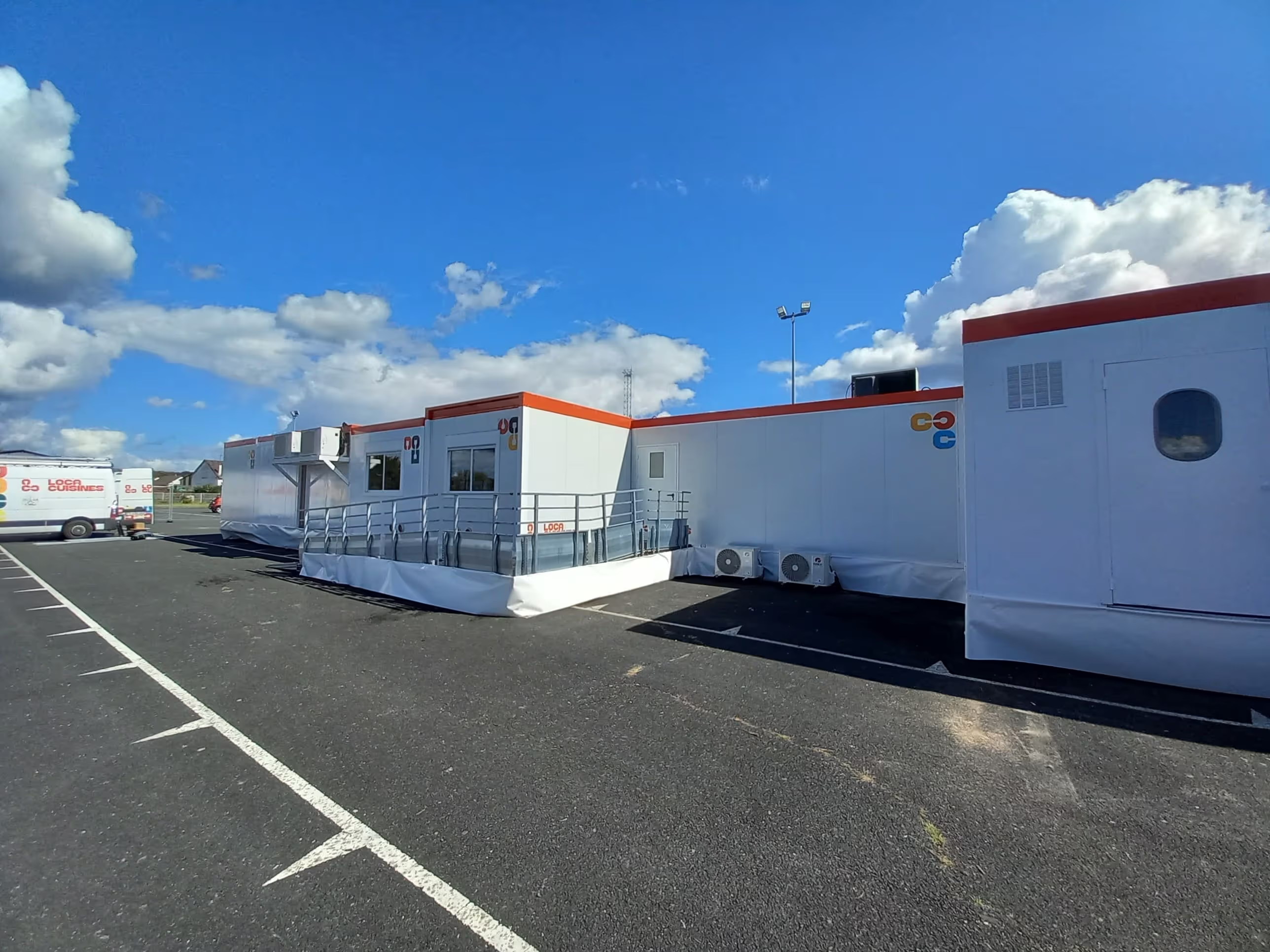
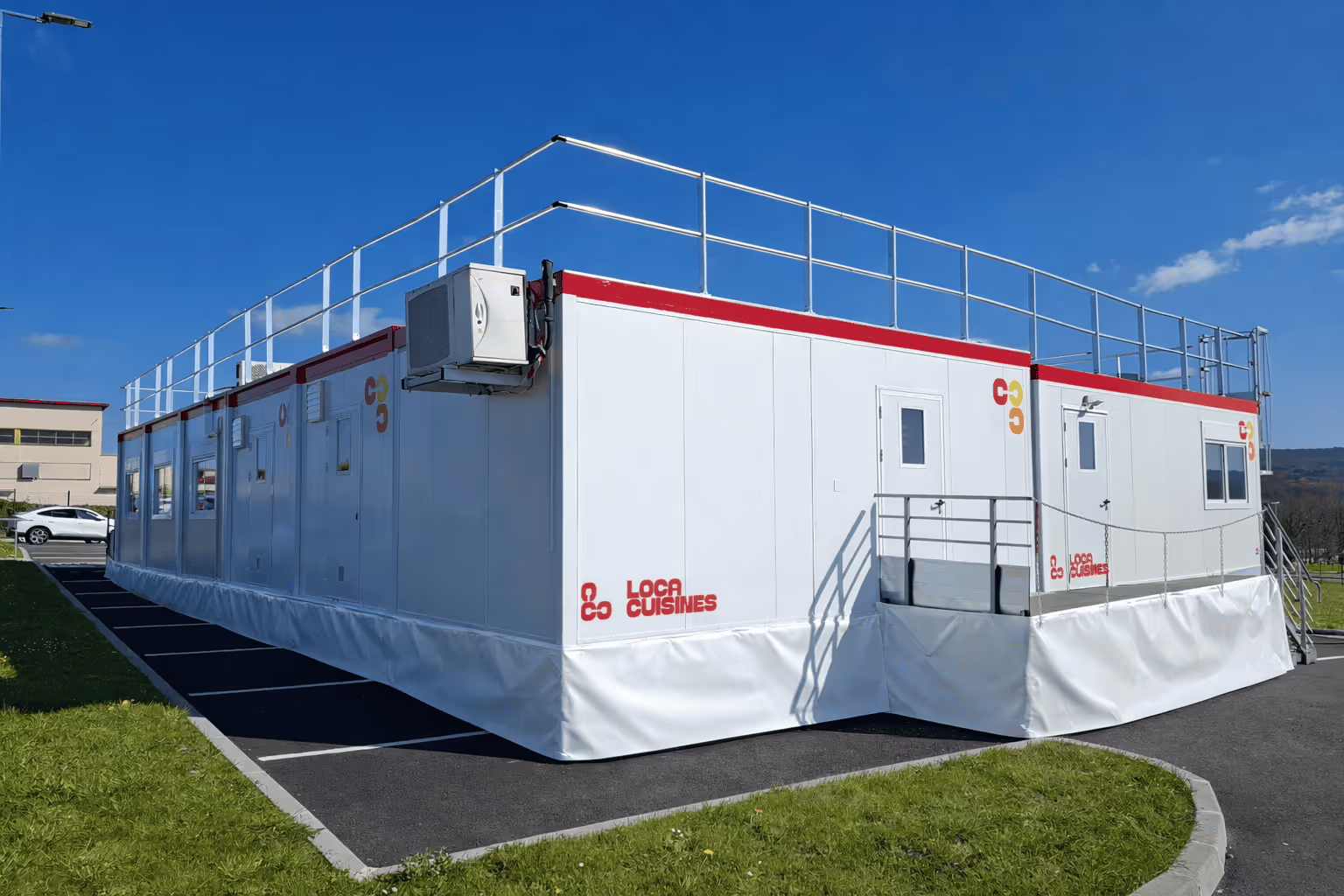
We’re also handling the festival’s organization, including setting up a food court and the food lab, which we created in collaboration with LocaCuisines. With the food lab, the goal was to promote plant-based cuisine through renowned chefs. For the food lab, we wanted to host the chefs in facilities that met stricter food safety standards than regular food stands. That’s why we requested to rent fitted-out shipping containers from LocaCuisines."
What festivals or events do you participate in?
"Thomas and I are both freelancers. Thomas does a lot of F&B work—press lunches, brand-sponsored lunches, and so on. As for me, I do a lot of consulting for restaurant owners and provide year-round support to chefs. Some chefs are approached for an event, and they contact me to set up the logistics."
What are your upcoming events?
"My most recent project was to handle all upcoming Hospitality and F&B requests for the Soccer World Cup in Qatar. I tried to make the event as sustainable as possible, even though these are countries that are less advanced in these areas."

3 festivals, 3 different challenges
Could you describe the Garorock, We Love Green, and Wonderland festivals in a few words and figures?
"For Wonderland, I was in charge of planning the entire food and beverage offering. It all started with a request for proposals issued by the SNCF to develop their underutilized sites. We Love Green responded to that call for proposals during the COVID pandemic. It’s a completely different operation from WLG—this one lasted four months and involved a lot of last-minute rushes to set up and run the venue (unlike WLG, which we prepare months in advance). For this festival, we reached out to you to rent kitchen equipment. In fact, we brought in one chef per week throughout the four months the venue was in operation. It was quite complicated for the teams—every week we had different types of cuisine with varying equipment needs. We made sure to place a large equipment order with you right from the start to plan as far ahead as possible.
We Love Green has been around for 10 years. WLG’s DNA is all about blending environmental issues, food, and art. The festival’s three main themes are very closely intertwined throughout the event. We strive to ensure that our themes are cohesive. We hold many joint meetings to discuss the festival’s environmental impact, particularly the carbon footprint of the food service operations. At WLG, we’re committed to constantly evolving and never resting on our laurels from the previous year.
Garorock was yet another type of event, since I was there as a restaurant owner. I set up a collaboration with two TOP CHEF contestants, Adrien Cachot and Mallory Gabsi. I handled all the project’s organization. We partnered with an event agency that specializes in both catering and public events for this festival. It was a different approach: we worked with fairly basic dishes—like smash burgers and pulled pork—but gave them a twist with a goat cheese sauce, which the festivalgoers really loved."
In 2022, We Love Green unfortunately had to cancel the Saturday night show. What were the consequences?
"When it comes to food, the consequences are pretty dire. We have about 60 restaurant owners who come here to prepare meals. One less day for them means a lot of food waste and a significant loss in revenue. That’s when we realized we still had a lot of work to do to cope with the weather conditions. The one big stroke of luck we had was that we work with wonderful people—they were very understanding."
A mission: to create an eco-friendly festival
What are the challenges and issues involved in producing a festival?
"Organizing a festival and running a restaurant are two completely different things. Thomas and I know that every year at We Love Green, there will be some missteps. We don’t just pick restaurants and tell them, ‘Congratulations, you’ve been selected.’ We provide a whole range of support through workshops where we invite all the key players involved in the food service sector."
"When it comes to events, it's always complicated. You never know how things will turn out. Every event is different; some require a specific power supply, so you have to adjust your equipment accordingly."
We Love Green is a socially conscious festival. What steps are being taken to make the festival more environmentally responsible when it comes to food?
"Thomas and I wanted to work more efficiently at We Love Green and examine the environmental impacts of an event of this size. For example, rather than having each restaurant owner arrange their own deliveries of ingredients, we’ve set up shared pickup routes. This way, we reduce the number of vehicles on the road during the festival."
Thomas and Marie chose to work with Écotable, an eco-friendly certification program for the restaurant industry. They’ve established a rating system for restaurant owners who want to promote more sustainable cuisine—covering waste management, product sourcing, and more. Once the restaurant owners are selected for the festival, we send them all the contact information along with details on the types of cuisine. The restaurateurs must send all invoices for everything they purchased for the festival to Écotable. From there, Écotable conducts a sort of audit for each restaurateur and forwards the results to us. Following this, the restaurateurs receive a small sticker for their booth certifying that they are providing sustainable catering services.
Another area we pay close attention to is waste management— both for festivalgoers and the food service operations. This year, once the festival ended, we sent as much waste as possible to a company that turned it into compost and biogas. For waste management, we work with the City of Paris and the AREMACS association.
As events unfold, we really come to realize that it’s much easier to organize events in regions we’re familiar with: we have a network of local vendors and businesses. This was a challenge we set for ourselves with Garorock: to work as much as possible with small local producers rather than those we’re used to working with in Paris. Not only is this to support local producers, but also to reduce the environmental impact of transportation from Paris. We succeeded about 80% of the time. The main problem we faced was with volume. Some producers simply couldn’t meet the demand.
When it comes to energy, we try to limit consumption by offering cost-effective power packages based on the size of the booth. If exhibitors require additional electricity, we bill them for it. The primary goal is to encourage them to reduce their energy footprint.
"Some festivals in Northern Europe are ahead of us when it comes to these eco-friendly issues. They focus much more on plant-based dishes than on meat-based ones. They advocate for a more sustainable approach to cooking, using ingredients that are in lower demand or have less of an impact on the planet."
A turnkey solution
How did you hear about LocaCuisines, and why did you contact us?
"It was Thomas, my business partner, who found you online back when we were at Wonderland. At that time, you only offered kitchen equipment. One of your sales representatives came to see us at Wonderland and showed us the modules. What appealed to us about your company was the long-term rental option. Your competitors didn’t offer them—or offered very few—and at prices that weren’t competitive. Thomas and I knew exactly what equipment we wanted when we contacted you. We’d already worked on several events, so we knew what the chefs would be asking for."
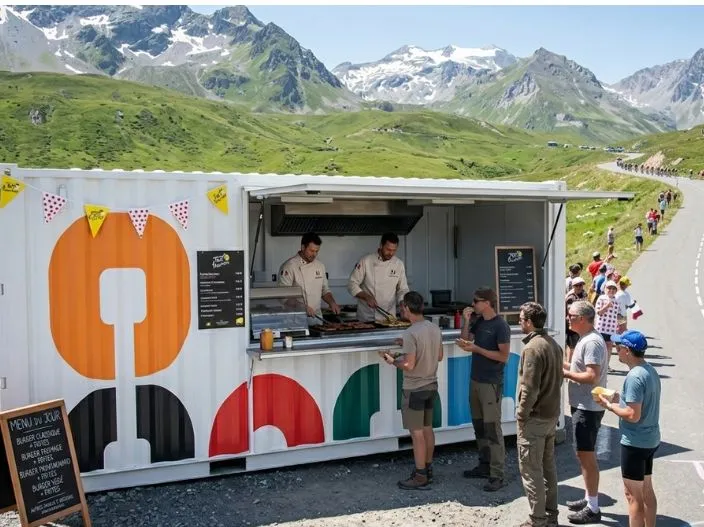
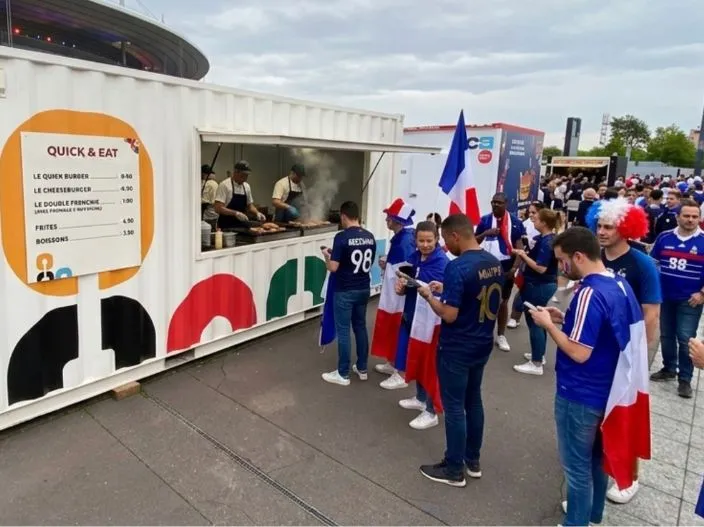
What has been your experience with using the Quick & Eat modules?
"As for the Quick&Eat events, most of the chefs told us they were great. Plus, a LOCACUISINES technician was on site throughout the festival, so he was able to respond quickly whenever needed. The only surprise we had was with the electrical connection. We were expecting a large outlet, but it turned out to be an electrical meter that we had to connect to. However, our electricians and your technician resolved this quickly so that everything would be ready for the festival, so it wasn’t really a problem."
In your opinion, what is the advantage of Quick & Eat for an event like We Love Green?
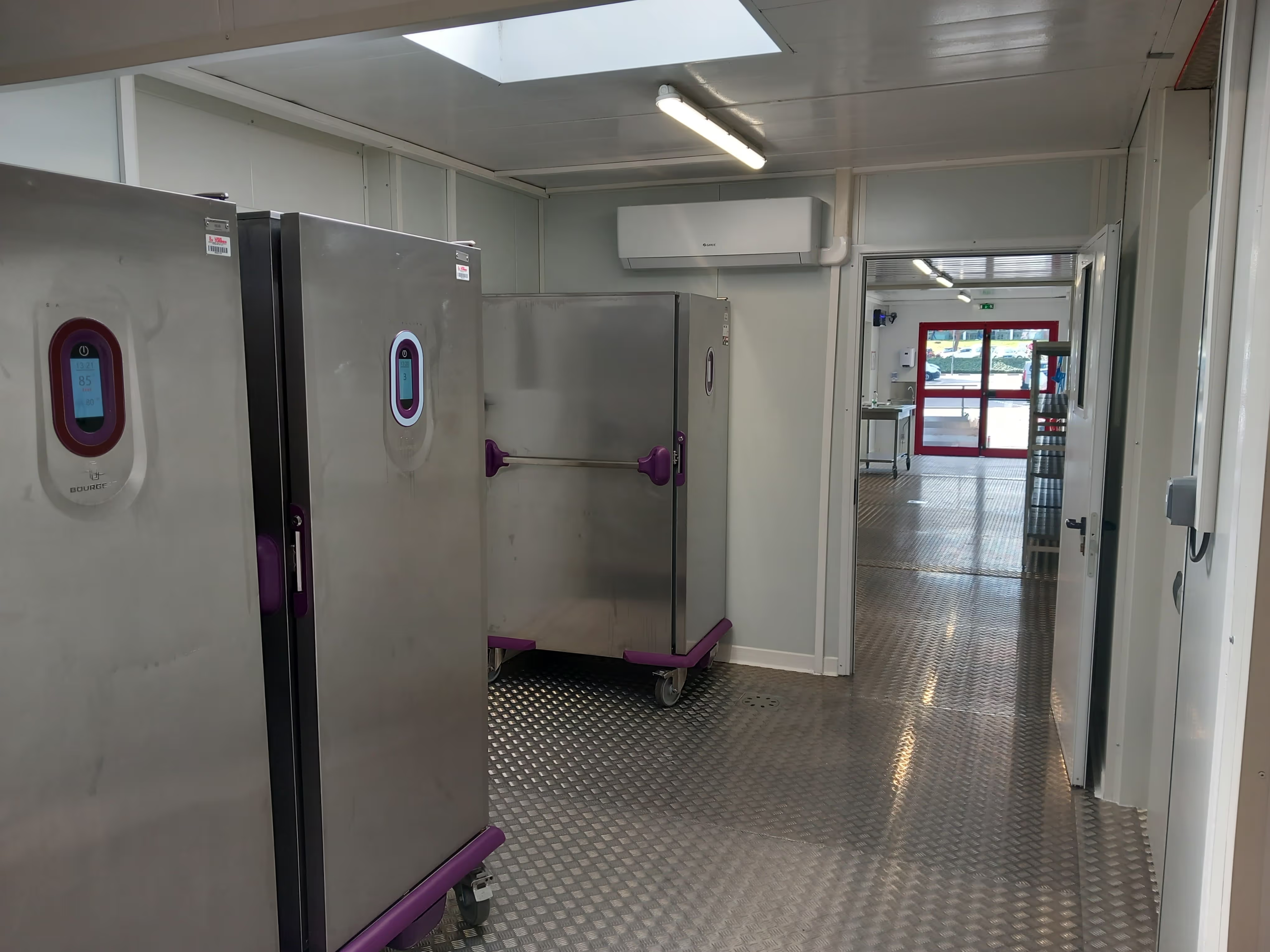
"The two main advantages: it's a turnkey solution, and it's comfortable for the chefs who work there.
"We got the four containers approved fairly late in the process. We had to be pretty careful on site—we couldn’t drive on the lawn or touch the trees—so it was still a pretty involved setup. But we were aware of that, so we didn’t run into any unpleasant surprises in that regard."
What if you had to sum up your experience with LocaCuisines in just a few sentences?
"A really great experience. It made a huge difference for us—it was much easier and smoother to build a relationship with our contacts, whether it was Jessy, Florent, or Samuel. They were very flexible and showed great understanding of the urgency we were facing. This has given us a lot of confidence for the years ahead as we look to develop other events outside of Paris. Just as with WLG and Garorock, we felt incredibly supported. Jessy, on the business management side, was extremely flexible with us, giving us plenty of time to respond. Florent and Samuel also followed up on the project. And they were always available—which is something very important in our line of work."


.png)
.webp)
.avif)


.avif)
%20(1).avif)
.avif)